
History and FutureHistory and Future of Molten Salt Technology
Aiming for green innovation through
social implementation of
"molten salt technology"
History of Molten Salt Technology

Throughout history, humanity has pursued dreams such as "elixirs of immortality," machines capable of "perpetual motion," and the "philosopher's stone"—a universal catalyst said to drive any chemical reaction at infinite speed. These dreams have been pursued through endless setbacks across a long history. The dream of using a "universal solvent" to freely carry out every chemical reaction is one such pursuit.
The solvent that comes closest to a "universal solvent" is water. Aqueous solutions are used in an extraordinarily wide range of applications, but the inherent properties of water impose limits on its capabilities, and it is far from "universal." Medieval alchemists discovered "molten salt" as a powerful solvent that could overcome these limits, and achieved many results by harnessing it.
In the 19th century, Humphry Davy and his disciple Michael Faraday stepped onto the historical stage and shine as the founders of "molten salt technology." Building on the wealth of experience accumulated by the alchemists and combining it with their own original insights, they systematized the field and made major contributions to establishing the academic and technical foundation of today's "molten salt technology"—particularly "molten salt electrochemistry." On this foundation, the "molten salt electrochemical industry" was born, including the electrolytic refining of metallic aluminum, rare earth metals, metallic magnesium, and metallic lithium. It has since grown, spread worldwide, and is now firmly established as a traditional industry.

I’MSEP is the only company in Japan
working on molten salt technology
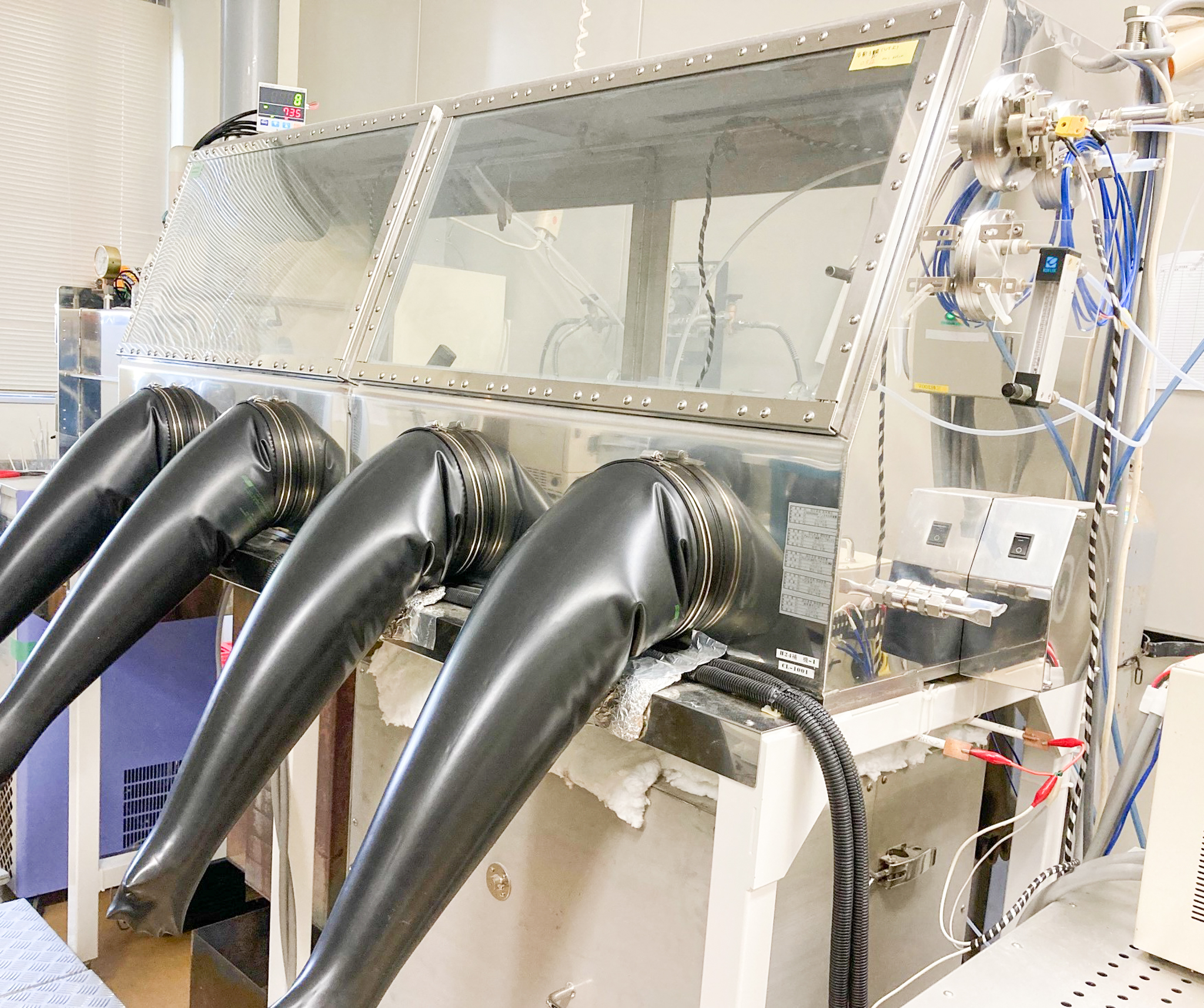
Today in Japan, industries built on molten salt electrochemistry are in decline due to rising electricity costs and constraints in resource supply chains. Internationally, however, the electrolytic refining of aluminum, rare earth metals, metallic magnesium, and metallic lithium remain widely established traditional industries grounded in molten salt electrochemistry. Japan's role and presence in this field remain unwavering—for example, in the molten salt electrochemical industry typified by aluminum smelting, SEC Carbon Co., Ltd. holds more than 45% of the global market share for the carbon materials that are essential components of electrolyzers.
I’MSEP Co., Ltd. holds the technical potential to inherit, innovate, and hand down these traditional industries, and we are actively pursuing business activities that contribute to the international community's paradigm shift toward a carbon-neutral, clean new era as advocated by the SDGs (Sustainable Development Goals). The many original technology seeds that I’MSEP has independently created and developed are now reaching the stage of commercialization and social implementation.
Furthermore, large-scale industries such as steelmaking are also turning their attention to I’MSEP's technical potential and technology seeds. We are confident that these trends are reinforcing one another and giving rise to "new industries" founded on molten salt technology, and we hold a strong determination to play a central role as the sole such presence in Japan and abroad.
Features of Molten Salt Technology
Compared with aqueous solutions, the liquid known as "molten salt" offers attractive properties and functions that cannot be expected from "aqueous solutions," as listed below. For example,
■The ability to dissolve a wide variety of substances
■Low vapor pressure even at high temperatures, with a free-flowing liquid form,
making it easy to handle
■Chemical stability with a wide "electrochemical window"
■High electrical conductivity
■Large latent heat of fusion (solidification)
■High resistance to radiation
By accurately understanding and applying these properties and functions, new possibilities can be uncovered—particularly as electrolytic baths (electrolytes) for electrolysis and batteries, and across many other broader fields of manufacturing.
What Molten Salt Technology Can Achieve

The paradigm shift toward an "SDGs (Sustainable Development Goals)" society—encompassing electric vehicles (EVs), 5G, the resource utilization and recycling of CO2, the hydrogen economy, and the ammonia economy—has become a major current alongside post-COVID social transformation. To accurately grasp this trend and open up future prospects, I’MSEP Co., Ltd. has been creating and developing innovative technologies, including various molten salt electrochemical process technologies such as "carbon plating," "CO2 resource utilization," "nanoparticle production," "recycling," and "ammonia electrolytic synthesis." Interest and expectations for the broader range of technologies that leverage molten salt are also rising both domestically and internationally.
In addition, by re-evaluating long-established technologies such as the production of metallic lithium, metallic magnesium, and rare earth metals via molten salt electrolysis, there is hope that they can take on new roles. Molten salt electrolysis technology can also provide new technology seeds that contribute to large-scale industries—for example, in the development of hydrogen-reduction ironmaking ("green steelmaking"). It is hoped that these currents will mutually reinforce and converge so that "new industries" will be created and green innovation realized through the social implementation of "molten salt technology."
Looking for high-quality electrolytic graphite plates?
SEC Carbon Co., Ltd.~Changing the future of manufacturing with carbon~